
How Do You Choose and Compare Dental Clinics Using an Evidence-Based Approach?
Choosing a dental clinic and comparing dental clinics should be based on how well the clinic fits the treatment need and on verifiable evidence, not on a single factor such as price, ratings, or popularity. A useful signal may help with evaluation, but it is not sufficient on its own as evidence for making a decision, and no single clinic is the most suitable for every patient and every need.
Suitability is determined by the treatment need and by how far the selection criteria are supported by verifiable information, so comparison is more consistent when dental clinics are assessed for the same need and under the same evidence standard. For this reason, choosing a dental clinic begins with clearly defining the treatment need before evaluating or comparing clinics.
Define Your Treatment Need Before Comparing Dental Clinics
Define the treatment need before you begin comparing dental clinics, because it determines the treatment requirements and the attributes that become relevant when evaluating options. The need for the required service or appropriate specialty forms the basis of suitability, rather than comparing clinics that do not address the same need.

Separate what the treatment need requires from what represents a personal preference when setting priorities. Essential requirements relate to the required service, the appropriate specialty, or any constraint necessary for the specific need, while preferences are secondary considerations that do not change the nature of the need itself. This distinction helps limit the comparison to dental clinics whose suitability can be evaluated on a common basis.
- Need: Define the treatment need on which the comparison will be based.
- Requirements: Identify the required service or appropriate specialty related to this need.
- Essential constraints: Distinguish what must be present for the option to remain relevant to the comparison.
- Preferences: Separate secondary priorities from essential requirements.
After defining this basis, you can move to Finding dental clinics in Saudi Arabia and narrow the candidates to those relevant to the need before beginning the evaluation. This starts the comparison among options that share a relevant basis instead of collecting different clinics and then trying to compare them.
Link the Comparison to the Service or Specialty You Need
The connection between the required service or appropriate specialty and the treatment need is a condition for eligibility in a dental-clinic comparison. A dental clinic enters the comparison set when its relevant treatment capabilities align with the need for which the comparison is being made.
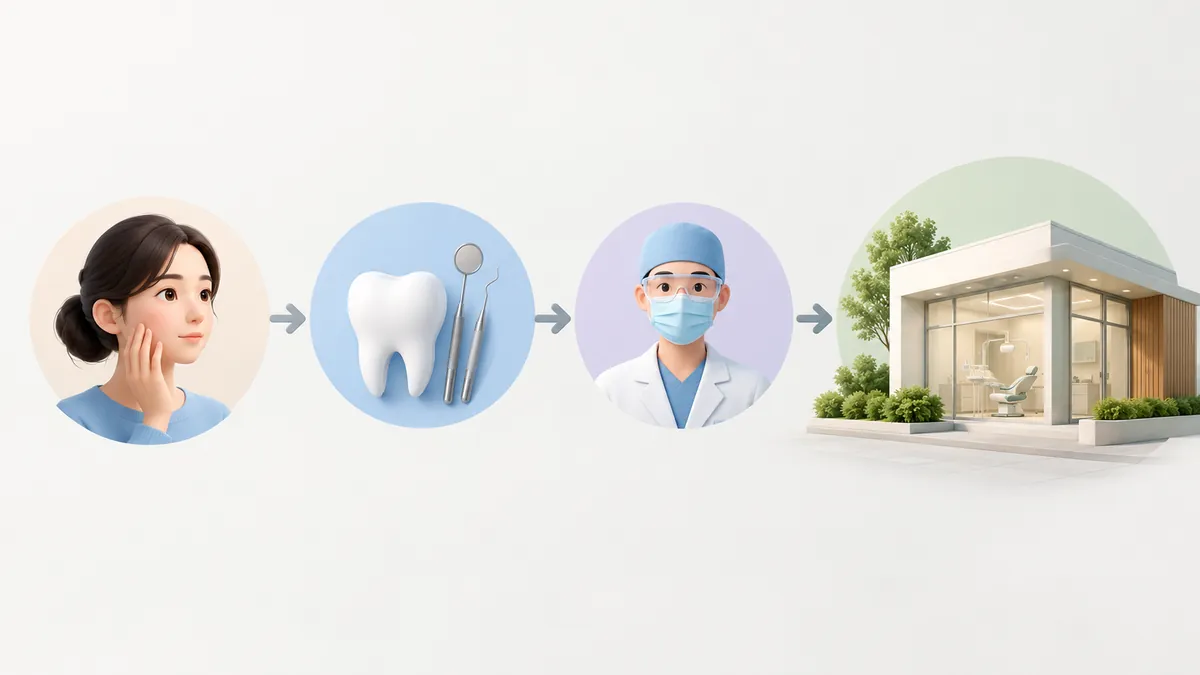
If a dental clinic does not provide the required service, appropriate specialty, or treatment capability needed for the specific need, a broader comparison with it loses meaning for that need. Suitability is assessed first based on the availability of the relevant capabilities, and options that do not meet this condition are excluded from the comparison set.
Separate Essential Requirements from Personal Preferences
Essential requirements are conditions a dental clinic must meet when required by the treatment need or personal circumstances, while personal preferences are factors that affect comfort or practical fit without necessarily being essential. What counts as essential or preferential depends on the user's need and circumstances, not on a fixed priority for everyone.

- Essential: A condition required by the treatment need or the user’s circumstances that must be met for the option to remain suitable.
- Essential: Failure to meet an essential requirement may exclude the dental clinic from the decision for that specific need.
- Preference: A factor reflecting personal preference, comfort, or practical fit among options that meet the essential requirements.
- Preference: Not meeting a preference does not automatically exclude an option, but it may change the dental clinic’s priority in the comparison.
The two categories affect the decision differently: an essential requirement may control whether an option is eligible, while a personal preference helps refine the fit among options that are already eligible. The classification of each criterion remains tied to the treatment need and the user’s personal circumstances.
Gather Verifiable Information About Each Clinic
Gather verifiable information about each clinic in the same fields before comparing them, so every attribute has an equivalent basis that can be checked. Dental-clinic information becomes usable for comparison when it is tied to a source or a clear verification status rather than relying on impressions or assuming the data is complete.
Start by identifying the clinic attribute you want to compare, then look for a source that can provide evidence related to it. Next, check what the source supports and record the verification status, leaving any unavailable or unverified information unresolved rather than assuming a value.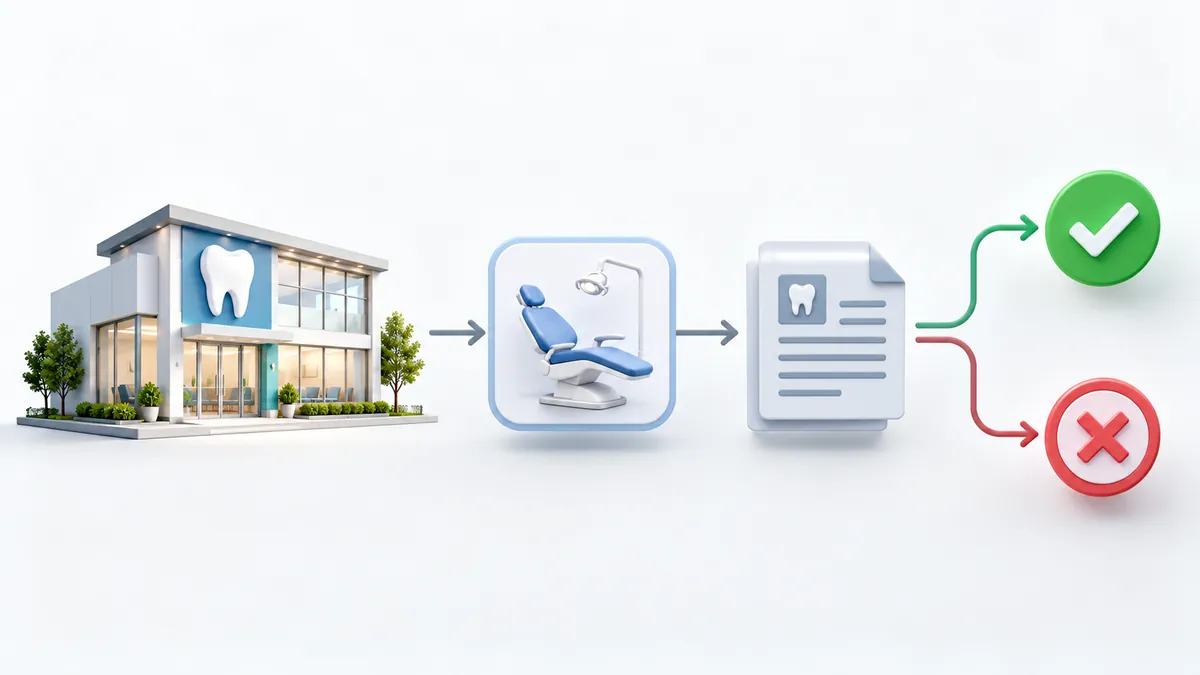 Some factual checks can be completed or confirmed through Checks before booking a dental clinic before booking, without turning an absence of evidence into a conclusion. To standardize evidence collection across clinics, apply the same steps to every field used in the comparison.
- Identify the attribute: Define the information you want to collect about the dental clinic, then use the same field with the other clinics.
- Identify the source: Record the source that is expected to support the information instead of repeating a claim without a checkable reference.
- Verify the claim: Check whether the evidence supports the same attribute and to the extent you will use it in the comparison.
- Record the status: Briefly classify the information as documented or verifiable, a claim or opinion, or unavailable or unresolved.
- Preserve uncertainty: Leave an unresolved value as it is when the source or evidence is insufficient, and do not replace it with an assumption.
- Standardize the fields: Apply the same attribute and verification method to every clinic so the documented data can be compared.
Treat documented information supported by an appropriate source and evidence as a different category from a marketing claim or from a patient’s opinion reflected in patient ratings; these signals do not automatically become facts about the clinic. If the source is unavailable or the information remains unresolved, record its status as it is and identify what requires later verification before booking rather than inventing a conclusion.
Distinguish Documented Information from Marketing Claims
Documented information about a dental clinic is tied to a source and evidence that allow a verifiable fact to be checked, while a marketing claim or promotional description still requires verification before it is used in a comparison. The strength of the presentation or marketing language does not change the status of the evidence.
- Documented information: It is tied to a source that can be checked and evidence that supports the information within the limits of what can be verified.
- Marketing claim: It requires a source and evidence independent of the promotional description before it can be treated as information usable in the comparison.
The type of source and its verifiability determine the evidentiary value of the statement; having a source is not enough if the evidence does not support the claim itself, and marketing language does not mean a claim is false simply because it is promotional. If a claim cannot be verified, it remains undocumented and unresolved rather than being turned into a positive or negative judgment about the dental clinic.
Treat Patient Ratings as a Supporting Factor, Not Sufficient Evidence for Selection
Patient ratings are a supporting factor for understanding patient experiences when comparing dental clinics, but they are not sufficient evidence on their own for choosing a dental clinic. Reviews may reveal a recurring pattern in patient experience without establishing every characteristic of the clinic or the level of care it provides.
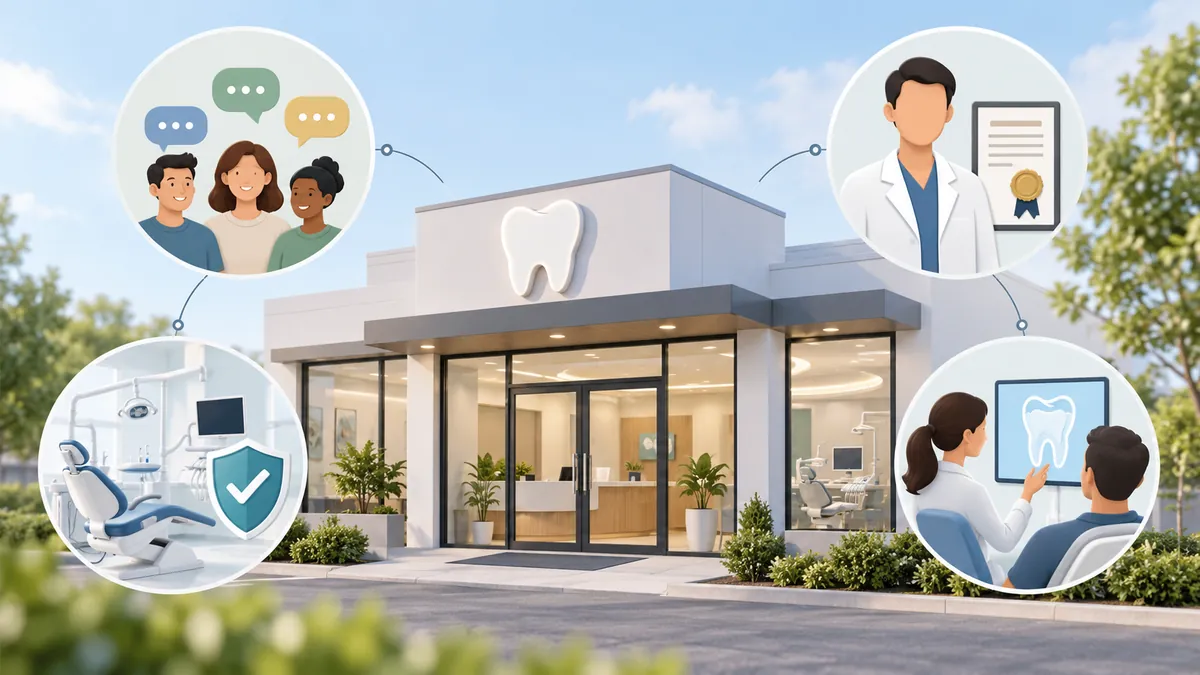
Patient ratings may point to experiences related to communication, appointment organization, and the clarity of information given to the patient, especially when a specific experience is described repeatedly across different reviews. Repetition of an opinion does not automatically turn it into an objective fact. Ratings do not establish licensing or professional specialty and are not sufficient to determine a particular level of clinical quality or the suitability of treatment for a patient’s condition. They should be interpreted within the context of the experience described, separating personal impressions from facts that require independent verification.
What ratings may indicate:
- Communication: Repeated descriptions of how procedures are explained or questions are answered may indicate a recurring pattern in the communication experience with the clinic.
- Service organization: Reviews describing appointments and reception may help explain aspects of patient experience without guaranteeing that they are consistent on every visit.
- Individual experience: A single opinion reflects its author’s experience under specific circumstances and needs to be read in context before it is generalized.
What ratings do not establish:
- Licensing: Patient opinions do not confirm the regulatory status of a dental clinic or the licenses of its practitioners.
- Clinical quality: Positive or negative impressions are not sufficient to establish a level of clinical quality or the safety of procedures.
- Specialty and treatment suitability: Reviews do not establish a dentist’s qualifications or that a particular treatment is suitable for another patient’s condition.
Handle Missing or Unverifiable Information Carefully
Missing or unverifiable information creates uncertainty and is not, by itself, positive or negative evidence about a dental clinic. Missing data should not be turned into an assumption about quality, safety, or suitability.
When information is missing, first try to verify it from an appropriate source, then classify its status based on the result. If sufficient evidence cannot be found, the information remains unresolved or unavailable rather than being assigned an invented value. Account for this gap in the comparison according to how important the information is to the actual need, without imposing a conclusion that the evidence does not support.
- Verified: The information has been verified with appropriate evidence and can be treated as known when interpreting and comparing.
- Unresolved: A verification attempt was made, but the available evidence is insufficient to establish or refute the information, so uncertainty remains.
- Unavailable: The information or a suitable way to verify it is not currently available, and its absence must not be turned into an assumption about the dental clinic.
Compare Clinic Quality Using Equivalent Criteria Tied to the Same Need
Comparing dental clinics requires the options to be assessed for the same need and compared using equivalent criteria. Quality differences become meaningful when the comparison dimensions represent the same attributes and are based on verifiable evidence.
| Comparison criterion | What must be equivalent | What differs between clinics | Effect of the difference on suitability |
|---|---|---|---|
| Dentists’ experience and qualifications | Relevance of qualifications and experience to the required treatment | Relevant qualifications and experience supported by verifiable evidence | The difference affects suitability when it is directly related to the same need |
| Services, specialties, and capabilities | The service, specialty, or capability related to the same need | The availability of relevant capabilities across clinics | The difference matters when it changes an option’s ability to meet the specific need |
| Clarity of the treatment plan and communication | Information about the plan and options being interpreted | Clarity of the explanation of the reason, alternatives, stages, and relevant limitations | The difference may affect the patient’s ability to understand the options and assess their suitability without, by itself, establishing clinical quality |
| Licensing, sterilization, and cost | Each dimension is compared separately using verifiable evidence of the same type | The status of each criterion and what the available evidence supports about it | The effect of each difference is interpreted within its own dimension and is not merged with other dimensions into one judgment about quality |
A common basis for comparison means fixing the treatment need and then checking the same fields for each clinic. Clinics are comparable when they address the same need and equivalent information is available for the dimension being evaluated. Comparing a documented qualification at one clinic with a general impression of another clinic, or comparing one service with a different service scope, mixes non-equivalent information. Evidence in one dimension must not substitute for missing evidence in another. Fixing the comparison basis makes it possible to distinguish evidence-supported differences from differences that cannot be interpreted on the same basis.
Relevant comparison dimensions include professional suitability, services or specialties related to the need, and clarity of the treatment plan, while licensing, sterilization, and cost remain separate dimensions. Meaningful differences are used to estimate suitability for the specific need, not to produce a single or absolute judgment about the quality of dental clinics.
Compare Dentists’ Experience and Qualifications as They Relate to the Required Treatment
Dentists’ experience and qualifications gain value in a comparison when they are documented and relevant to the required treatment. A dentist should be evaluated using documented qualifications and experience relevant to the treatment need, not a general impression of reputation.
The significance of qualifications varies with their relevance to the treatment, and a specialty is useful when it matches the type of need being compared. Years of experience alone do not necessarily show the nature of experience relevant to the treatment, and reputation or a marketing claim does not establish professional competence in a specific procedure. When comparing, look for evidence that clarifies relevant qualifications and experience rather than turning length of practice into a judgment about quality. Suitability has stronger evidentiary support when documented qualifications and experience align with the required treatment.
- Qualifications: Verify that a documented qualification exists and that it is relevant to the field connected to the required treatment.
- Specialty: Compare how closely the dentist’s specialty relates to the treatment need being evaluated.
- Experience: Look for experience relevant to the required treatment rather than relying on years of practice without context.
- Reputation and claims: Treat them as information that is not sufficient on its own to establish suitability unless supported by evidence related to relevant qualifications or experience.
Compare Services, Specialties, and Capabilities Relevant to Your Need
Compare only dental clinic services, dental specialties, and capabilities that relate to the same treatment need, because a broader range of unrelated services does not change suitability for that need. Understanding dental clinic services helps clarify what a relevant service represents before comparing service availability across clinics.
Having a service at a clinic does not mean it affects the decision unless it is related to the required treatment and supports the treatment capability needed for it. Similarly, differences in specialty become meaningful when the appropriate specialty relates to the need; Understanding dental specialties helps interpret these differences within the comparison. Treatment capabilities are evaluated by their relevance to the need and their availability, not by the breadth of the offering.
When equivalent information is available, link each treatment need to the relevant service, specialty, or capability, then verify its availability and interpret its effect on suitability.
| Need | Relevant service or specialty | Is it available? | Effect on suitability |
|---|---|---|---|
| Specific treatment need | Service, specialty, or capabilities directly related to the need | Availability is verified for each clinic | May support suitability when the treatment capability aligns with the need |
- Available and relevant to the need: Include it in the comparison because its availability and relevance to the need may affect suitability.
- Available but not relevant to this need: Exclude it from weighting because a broader range of unrelated services does not change the decision for the specific need.
Compare the Clarity of the Treatment Plan and Communication About Available Options
The clarity of a treatment plan can be compared by how clearly the reason for the proposed approach, alternatives, and expected treatment stages are explained, not by judging the medical validity of an individual plan. Communication is used here to understand how clearly the information and options available to the patient are explained.
Communication is clearer when it explains the reason for the plan, presents relevant alternatives, identifies treatment stages and relevant limitations, and allows the patient to ask questions and understand the answers. These attributes help compare how well the explanation supports understanding and decision-making while considering suitability for the case. Communication quality alone cannot establish the validity or clinical superiority of a treatment plan, and a clear explanation does not establish clinical quality. The following indicators assess clarity of communication and what can be observed in the explanation of a treatment plan, not the validity of the medical plan itself:
- Reason for the plan: Is the reason for proposing the treatment approach explained in a way that can be understood?
- Alternatives: Are the available options and relevant alternatives presented clearly without assuming that one option is always correct?
- Treatment stages: Are the expected stages of the plan explained so their general sequence can be understood?
- Limitations: Are relevant limits or considerations made clear rather than left implicit?
- Patient questions: Is there an opportunity to ask questions and receive clear explanations that help the patient understand the plan and options?
Keep Licensing, Sterilization, and Cost as Separate Verifiable Criteria
Licensing, sterilization and infection control, and dental service costs are separate criteria because they answer different evaluation questions and should not substitute for one another. Verifying a dental clinic license is treated as a separate verifiable criterion related to regulatory requirements and licensing evidence, but it does not by itself establish overall quality or suitability for a particular need.
Sterilization and infection control in clinics concerns evaluating infection-control procedures and safety signals that can be verified when appropriate evidence is available, and it is a different dimension from licensing. Sterilization information alone is not sufficient to establish overall quality or the safety of every procedure in every case.
Understanding dental service costs is used to compare price or cost with service scope and suitability, rather than interpreting cost alone as evidence of value or quality. Cost should remain an independent criterion interpreted alongside other evidence, without assuming that a higher or lower price determines the most suitable option.
| Criterion | What is verified | What it indicates | What it does not establish on its own |
|---|---|---|---|
| Licensing | The presence of suitable evidence through which licensing status and relevant regulatory requirements can be verified | A specific verifiable status within the regulatory dimension | Overall quality or the clinic’s suitability for an individual need |
| Sterilization and infection control | Available information or evidence about sterilization and infection-control procedures | Indicators related to infection-control and safety procedures within the limits of available evidence | Overall quality or a guarantee of the safety of every procedure in every case |
| Cost | The cost of dental services and the service scope covered by the available information | A basis for comparing cost with service scope and suitability when equivalent information is available | Value, quality, or suitability on its own |
Balance the Evidence to Identify the Clinic Most Suitable for Your Need
Start by meeting the essential requirements and remove from comparison any option that does not meet them, then weigh the evidence among the remaining clinics. Next, compare the strength of the evidence and its relevance to the need, then assess practical fit while preserving any unresolved uncertainty.
Choosing among options depends on documented evidence and on how strong and relevant the evidence is to the criterion that actually affects your need, not on converting criteria into numerical weights. Evidence is stronger for use in comparison when it is verified and directly related to the attribute being evaluated, while its value in the decision is lower if its relevance to the need is limited or its status remains unresolved. Practical fit is then interpreted according to how well the option matches your circumstances and need among the clinics that remain eligible. The decision can be carried out in this order:
- Meet the essentials: Keep a dental clinic in the comparison if it meets the essential requirements related to your need, and exclude an option that does not.
- Compare the evidence: Compare evidence strength and evidence relevance among the remaining options, distinguishing documented and verified evidence from unresolved information.
- Assess practical fit: Weigh the evidence qualitatively together with practical factors relevant to your need to determine how suitable each option is.
- Preserve uncertainty: If influential information remains unresolved, seek additional verification or postpone a firm conclusion rather than assuming an outcome.
Uncertainty in influential information should remain visible in the decision and should not be treated as evidence for or against a clinic. A clinic is suitable when it meets your essential requirements and the available evidence supports its practical fit for your need; this conclusion is conditional on that need and on the completeness of the evidence, not a judgment of overall superiority.
Exclude Options That Do Not Meet Your Essential Requirements
Exclude a dental clinic only when the available evidence shows that it does not meet an essential requirement directly related to your need. Missing or unverifiable information is not the same as failing a requirement; it means the status of that criterion remains unresolved.
- Essential requirement met: Keep the clinic among the options when verifiable information supports that the specific requirement is met.
- Essential requirement not met: Exclude the clinic when there is clear evidence that it does not meet the requirement you set as essential to selection.
- Unresolved status: If information is absent or insufficient for verification, do not turn uncertainty into a negative judgment; look for additional evidence before deciding to exclude the clinic.
Apply exclusion to essential requirements, not personal preferences. An option may be less suitable because a preference is not met without automatically becoming ineligible. In this way, an exclusion decision remains the result of a specific criterion and a clear verification status, not a general impression or undocumented assumption.
Make the Final Choice Using Both Evidence Strength and Practical Fit
Among the dental clinics that remain eligible, give priority first to relevant, verifiable evidence, then use practical fit to distinguish among suitable options. The decision does not require a numerical score or an absolute ranking; it requires balancing the strength of the evidence with how well the option matches your need.
- Relevant documented evidence: Give greater weight to verifiable information directly related to the criterion you are comparing.
- Practical fit: When the evidence is similar among eligible options, use how well the service and practical circumstances match your need to distinguish between them.
- Unresolved information: If influential information remains unverifiable, treat it as a point that needs additional verification rather than assuming a final conclusion.
Marketing claims or individual opinions do not carry the same interpretive weight as relevant, verifiable evidence because they may not establish the criterion you are trying to evaluate. These signals can be used to identify what needs additional verification, but they should not outweigh clearer, more verifiable information. The final choice remains conditional on the strength of the available evidence and the practical fit of each case, keeping what remains unresolved within the scope of verification rather than assumption.
Avoid Errors That Weaken Dental Clinic Comparisons
Selection errors can lead to a misleading result even when a dental-clinic comparison is based on useful information, because the error may lie in how the evidence is interpreted or how the criterion is applied rather than in whether the information is available. When a criterion is given weight that does not match what it establishes, the decision can change without any improvement in the quality of the evidence.
A comparison error can be recognized when the decision moves from clear evidence and a clear criterion to a conclusion that is not supported by the available information or does not maintain equivalence between the options. Correct it by reconnecting each conclusion to the evidence and criterion that support it, and by avoiding use of limited signals to establish claims beyond their scope.
Do Not Choose a Clinic Based on Price or Rating Alone
Price or patient ratings alone are not enough to choose a dental clinic, because relying on one factor can hide information that affects suitability for the treatment need. Either can serve as supporting evidence, but its value depends on how it is interpreted in a broader context.
- Single price or rating: Reduces the decision to one signal and may hide differences in service scope or how relevant the option is to the treatment need.
- Multi-evidence decision: Interprets price and patient ratings alongside evidence related to requirements, service scope, and suitability.
The error becomes clear when a difference in price or rating alone leads to favoring one clinic without checking whether the options are similar in service scope and meet the relevant requirements. Cost needs to be interpreted according to what the service includes, while reviews reflect opinions and experiences and do not replace other evidence. Correct the comparison by linking each signal to what it can establish and combining it with evidence directly related to the treatment need. A higher value in price or rating, on its own, does not mean greater suitability.
Do Not Compare Clinics with Different Services or Specialties as If They Were Equivalent
Clinics that differ in services, specialties, or capabilities directly related to the treatment need are not equivalent options for side-by-side comparison. A comparison becomes valid when the options share the same need and the relevant capability to address it, after which secondary criteria can be compared.
For example, if two clinics address the same treatment need with relevant, comparable capabilities, other factors can be evaluated between them on a common basis. If one clinic lacks the capability related to that need or offers a different scope, it belongs to a different comparison set in this context; this does not mean it is inferior or superior in absolute terms.
To correct the comparison, first define the shared need and the capability related to it, then verify that the options are equivalent on that basis before moving to secondary criteria. Differences in service scope or degree of specialization do not establish superiority by themselves; what matters is whether the options share a basis that allows them to be compared for the specific need.
Do Not Treat Missing Information as Positive or Negative Evidence
The absence of information about a dental clinic means the status of the criterion is unknown or unresolved; it is not positive or negative evidence by itself. Missing information does not become confirmation before verification supports the conclusion.
- Unknown: The information is unavailable or there is not enough evidence to decide, so the status remains unresolved without an assumption.
- Confirmed: Information or evidence is available that allows the status of the criterion to be confirmed within the limits of what it establishes.
Turning missing information into an assumption can make the decision depend on an interpretation not supported by the available evidence. Keep the unknown value as it is until verification becomes possible, rather than treating the dental clinic as meeting or failing the criterion solely because the information is absent. If evidence appears later, the status can be updated according to what that evidence supports. What has not been verified remains unresolved, and only what has been verified can be treated as confirmed.