Dental Clinic: What Is It and What Role Does It Play in Patient Care?
A dental clinic is a care facility organized around oral and dental health and patient care. Its general role includes assessment, prevention, care, and follow-up according to the patient's needs. The scope of what a dental clinic can provide may vary based on its capabilities, professional team, and available equipment.
Not every dental clinic has the same capabilities, so the clinic should be understood here as a care environment without assuming a uniform range of services or specialties. Once this general role is understood, the Dental clinic directory in Saudi Arabia provides a path into clinic discovery, while a dental clinic remains fundamentally a facility dedicated to oral and dental health care.
What Is a Dental Clinic?
A dental clinic is a healthcare facility organized to provide the care environment needed for dental care through a dentist or professional team, with a dedicated patient area and equipment related to clinical activity. In this sense, the clinic includes the organized setting, professional personnel, and equipment that enable dental care to be provided, while the composition and scope of these elements vary between clinics.
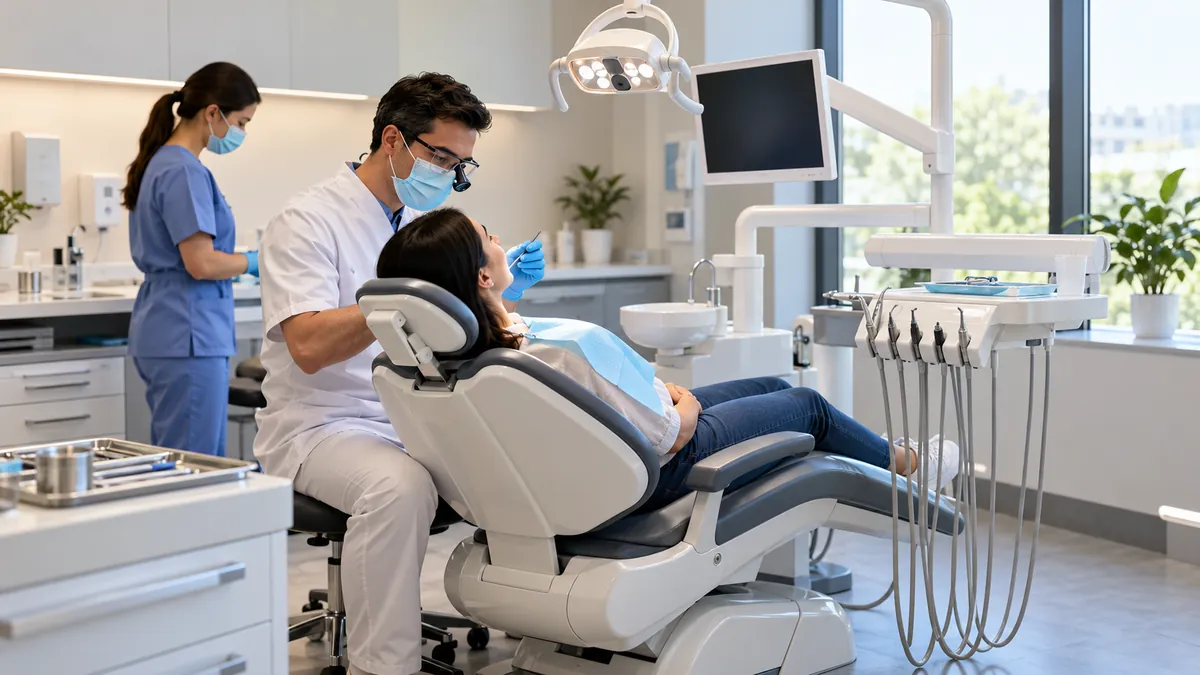
A dental clinic is not the dentist. The clinic is the facility or organized care environment, while the dentist is a professional care provider who works within that environment. A facility may include a professional team, equipment, and a range of clinical activity that varies by clinic, but this variation does not remove the distinction between a dental clinic as a facility and a dentist as an individual professional.
What Role Does a Dental Clinic Play in Patient Care?
The role of a dental clinic is to support patient care through assessment, prevention, care delivery, follow-up, and communication according to the patient's needs. The scope of this role varies according to the professional team, departments, and capabilities available at the clinic.
These functions are connected to patient needs. Assessment helps clarify the need for dental care and determine what can be provided within the clinic's scope, while prevention, follow-up, and communication are supported according to the situation. The ability to provide appropriate care depends on the capabilities available at the dental clinic. The Dental clinic services guide presents details about capabilities and services that may fall within the scope of care, without assuming they are available at every clinic.
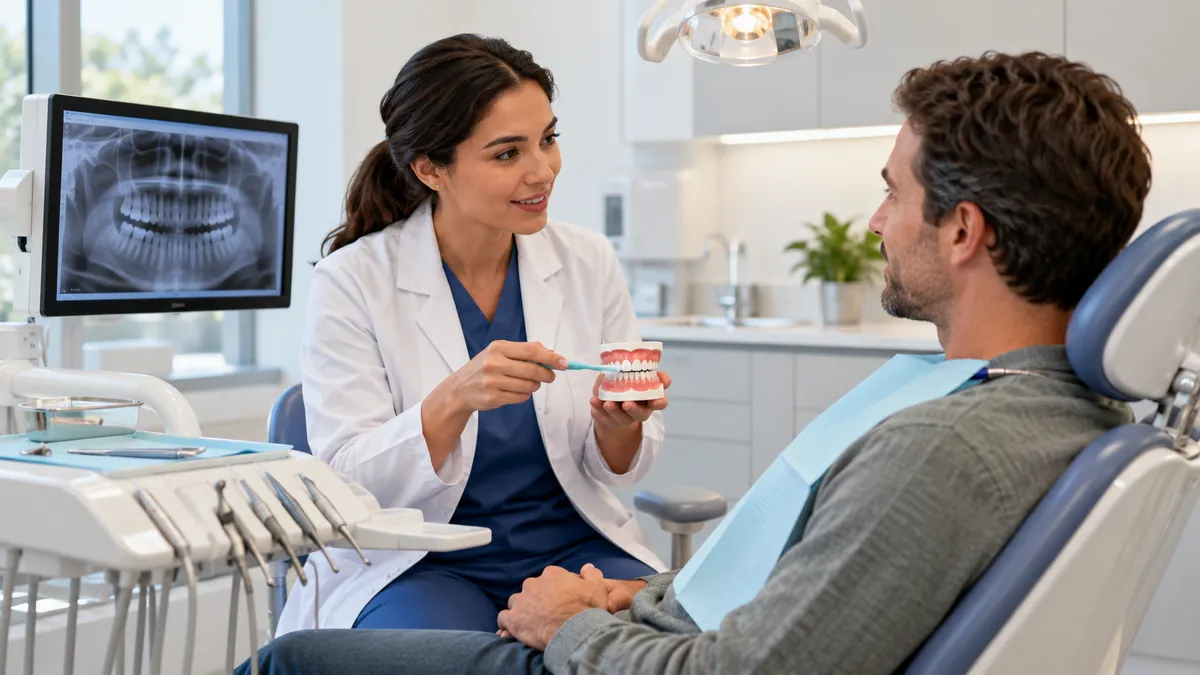
The general role of a dental clinic does not mean that the scope of care is identical across clinics. The functions actually available may differ according to the professional team and available capabilities. Follow-up and communication remain part of the relationship between patient needs and the care the clinic can support within its scope.
How Does a Clinic Bring Together Assessment, Prevention, Care, and Follow-Up?
Assessment, prevention, care, and follow-up are interconnected functions, but they do not form one fixed pathway for every patient. These functions interact around the patient's needs and changes in their condition.

Assessment can clarify the patient's current condition and needs, and preventive guidance may be directed according to relevant risks. Care can respond to the identified need within the clinic's capabilities, while follow-up may reassess progress or ongoing needs. In practice, the connection between these functions depends on the patient's needs and the clinic's capabilities.
What Are the Main Components of a Dental Clinic?
The main components of a dental clinic include the professional team, patient care areas, clinical equipment, support systems, and operational infrastructure. These components work together within the care environment, with each serving a specific function in organizing work and supporting patient care.
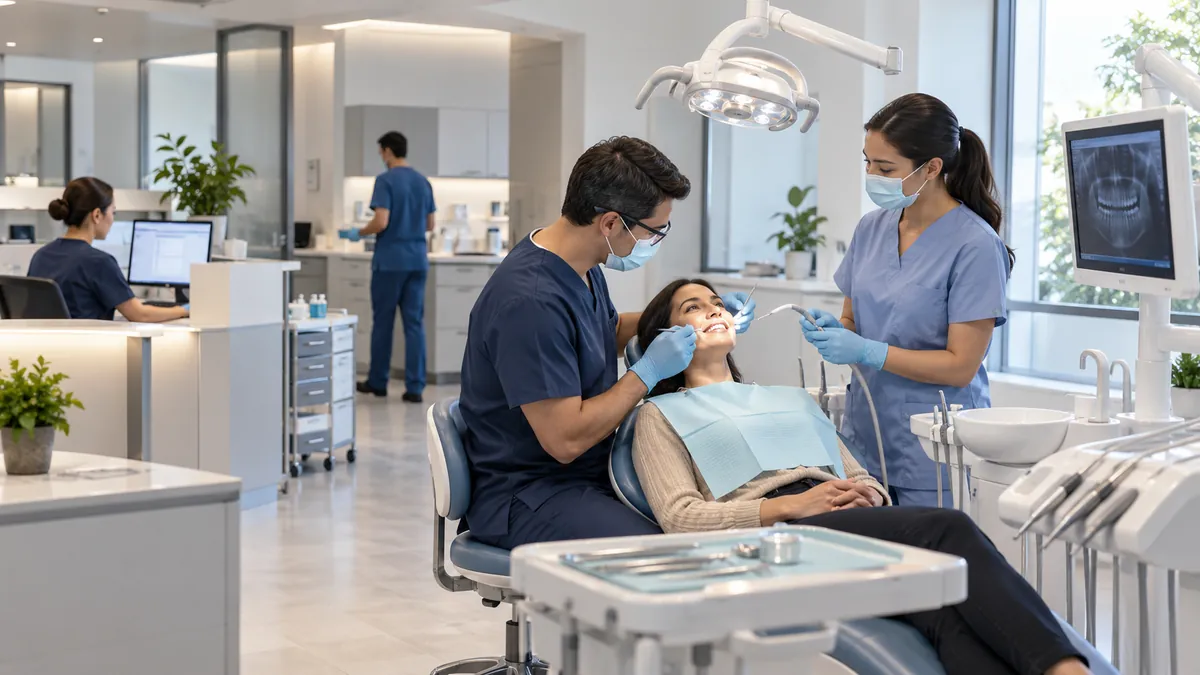
- Professional team: Carries out the professional roles connected to patient care and the operation of clinical activity within the clinic's scope.
- Patient care areas: Provide the spaces where care and interaction with the patient are organized within the clinic environment.
- Clinical equipment: Supports clinical activities such as examination and care according to the clinic's capabilities.
- Support systems: Help manage records and information and coordinate care-related workflow.
- Operational infrastructure: Supports the operation of the care environment and the organization of supporting functions needed to keep the clinic running.
These categories form a functional map of the clinic's components, while the composition, scale, and technologies of each category may vary based on the clinic's size, organization, and scope. Classifying components by function helps explain the clinic's structure without treating the categories as an exhaustive inventory of what is found in every facility.
The Professional Team Working in a Dental Clinic
The professional team in a dental clinic is the human component involved in patient care and clinic operations. It may include the dentist along with support staff in clinical or administrative roles. The composition of the clinic team and the responsibilities of its members vary according to the clinic's scope, qualifications, and applicable requirements.
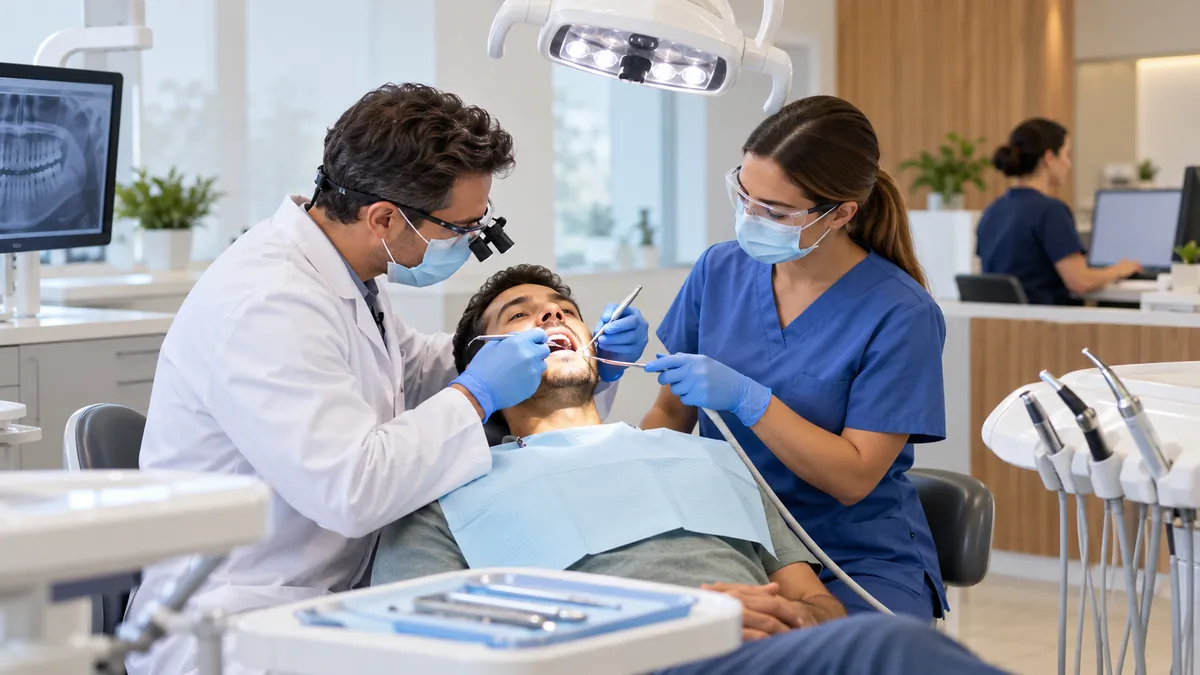
The dentist's role is connected to assessment and providing care within the scope of practice, while support staff may contribute to clinical assistance, workflow support, and patient care. Administrative roles may include organizing records, appointments, communication, and follow-up according to the clinic's organization. Professional roles and internal arrangements vary by clinic scope and requirements, while the Dental clinic specialties and departments guide explains the classifications and details specific to this topic.
Care Environment and Essential Equipment in a Dental Clinic
The care environment and essential equipment in a dental clinic can be understood through the functions they support. A dental chair positions the patient in a way that supports examination and treatment, while clinical equipment supports care-related activities within the clinic's scope. The clinical environment may also include imaging equipment when available and systems that support records and workflow.
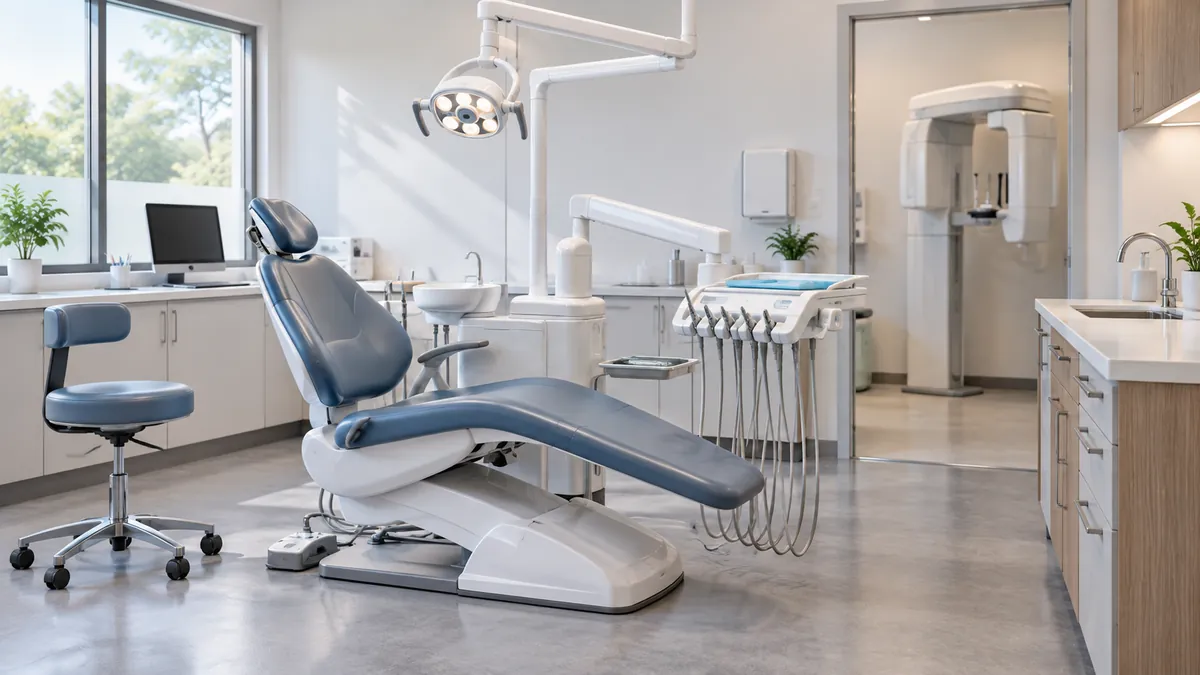
- Examination: The care area and dental chair support patient positioning and the examination process.
- Treatment: Clinical equipment supports care and procedures that fall within the clinic's capabilities.
- Imaging when available: Imaging equipment may support assessment when this capability is available at the clinic.
- Instrument handling: Dedicated space and equipment help organize the handling of instruments related to clinical activity.
- Records and workflow: Support systems help manage records and organize information related to workflow.
The dental chair and the examination and treatment area are examples of elements directly connected to the care environment, while imaging technologies, systems, and other equipment may vary with each clinic's scope and capabilities. The presence of a set of equipment does not mean that all dental clinics have the same configuration or technology.
How Does a Dental Clinic Differ from a Dentist and a Dental Complex?
The distinction between a dental clinic, a dentist, and a dental complex is based on entity type and organizational scope. A dental clinic is a facility that serves as a care environment, while a dentist is an individual professional who works as a care provider. A dental complex may refer to a facility with a broader organizational scope that includes multiple departments or clinics, depending on the terminology and organization used.
| Concept | Entity type | Organizational scope | Staff or professional relationship |
|---|---|---|---|
| Dental clinic | Facility or care environment | Scope of a facility dedicated to dental care | A dentist works there and may be joined by support staff |
| Dentist | Individual professional | Care provider, not a facility | Practices professionally within a clinic or care facility |
| Dental complex | Facility | May refer to an organizational scope that includes multiple departments or clinics | May include more than one dentist and support staff according to the facility's organization |
The use and scope of the term dental complex are not uniform across all contexts, so fixed organizational characteristics should not be inferred from the name alone. The basic distinction remains that a dentist is an individual care provider, while a dental clinic and a dental complex refer to facilities, with the complex's organizational scope potentially varying according to its organization.
Dental Clinic and Dentist: The Difference Between a Facility and a Care Provider
A dental clinic is a facility that serves as a care environment, while a dentist is the professional person who works as the care provider. The facility provides the organized environment in which care takes place, while the dentist practices professionally within an appropriate care environment. A dental clinic and a dentist are connected through the relationship between a facility and a care provider, and the two terms do not refer to the same type of entity.
Dental Clinic and Dental Complex: The Difference in Facility Scope
The use of the term dental complex may vary by terminology and organization, so the practical difference between a dental clinic and a dental complex concerns facility scope rather than quality. A dental clinic may represent a treatment unit within a defined facility scope, while a dental complex may include multiple clinics or departments, a larger staff, and a broader range of facilities.
The size of the organization or staff does not by itself determine quality, and the evidence available here does not establish fixed boundaries that can be generalized to distinguish a clinic from a complex. The meaning and scope of dental complex remain tied to the terminology and organization used in each context.
When Is Visiting a Dental Clinic Appropriate?
The timing of a dental clinic visit depends on the reason for the visit, individual risks, the clinician's advice, and clinical circumstances. A visit may be appropriate for a routine examination or preventive follow-up, while new symptoms or changes in condition may call for professional assessment at a time determined by the individual's circumstances.
Routine or preventive visits can be distinguished from new or changing concerns based on the reason assessment is needed, without treating these situations as diagnoses in themselves:
- Routine examination or preventive follow-up: A dental clinic visit may be appropriate according to the follow-up plan, individual risks, and the clinician's advice.
- New symptoms: The appearance of symptoms that were not previously present may call for professional assessment to determine their nature and the need for care.
- Persistent discomfort: Ongoing discomfort may justify seeing a dentist for assessment, without discomfort alone establishing a specific cause or diagnosis.
- Visible changes: Noticeable changes in the teeth or mouth may need professional assessment, and the timing of the visit depends on the nature of the change and the clinical circumstances.
- Injury or a previously identified condition: An injury or the need to follow up on a previously assessed condition may call for a dental clinic visit according to the condition and professional guidance.
A routine visit differs from a clinic visit prompted by new symptoms, persistent discomfort, visible changes, or an injury. The first is connected to periodic examination and preventive follow-up, while new or changing concerns may need professional assessment more closely tied to how the condition is developing. The presence of a particular symptom or change does not by itself establish a diagnosis, and the timing of assessment depends on individual circumstances.
The evidence available here does not establish a single interval suitable for everyone. Visit frequency may vary according to individual risk, condition, and the clinician's advice. Once the need for a visit has been identified, How to choose a dental clinic becomes a separate task involving clinic selection and comparison.